Showing posts with label Beijing. Show all posts

4/18/2009

Advances and Advance Notice


We were delighted to come across a piece by Friend of the Blog Michael Meyer (called "About That Book Advance...") in last week's New York Times Sunday Book Review section. We figured, based on the author's track record as a writer (and the insightfulness of his comments when talking about his work), that this piece would be lively and offer some illumination on an interesting topic and that it might also have some China tidbits. Well, it was not just illuminating (explaining how tough it can be for an author to live on what sounds at first like a very good advance, once the agent's cut and self-employment taxes come into play) but also entertaining (a favorite part: how in literary circles advance amounts are sometimes "coyly described like cigarette brands — the 'mid-fives,' the 'low sixes,' the 'mild sevens'").

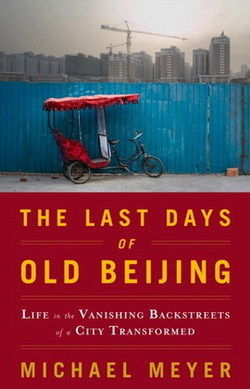
But as for China tidbits... there were only two. We learned how much of an advance Meyer got for his book, The Last Days of Old Beijing (as in the spirit of disclosure he tells us precisely: $50,000), and even better we learned that his book will be coming out in paperback next month (take note all those in book groups, as it would work nicely in that setting). What kind of advance, you may be wondering, did we receive for China in 2008? Rather than tell you a number, let's just say it was in the "barely fours"--so barely that with just a dollar taken away, it would have been a three figure advance (albeit one of the "mighty threes"). Of course, Rowman & Littlefield basically doubled their up-front lay-out by giving each of our contributors a free copy.

After reading the piece, some of us had two thoughts. First, that academics trying their hand at writing for general audiences are lucky to have day jobs to cover the bills. And, second, that it would be nice if the New York Times Sunday Book Review section editors liked Meyer's essay as much as we did, in which case they might commission a sequel, in this case demystifying the high amounts paid for translation rights. A good starting point might be that famous $100,000 reportedly offered to bring out the English language version of a certain Cry of the Wild with Chinese characteristics, boy meet wolf tale that was criticized and celebrated by different China Beat contributors last year (and incidentally inadvertently helped China Beat earn its first mention in the New York Times' excellent "Paper Cuts" book blog).

**

As an addendum, we wanted to mention this upcoming event with Michael Meyer in New York:

The Last Days of Old Beijing - A Conversation with Author Michael Meyer
May 7th 6:30 - 8:00 pm New York Asia Society and Museum, Auditorium, 725 Park Avenue, New York
Cost: $7 students and members, $10 nonmembers

A longtime Beijing resident, Michael Meyer has, for the past two years, lived as no other Westerner – in a shared courtyard home in Beijing’s oldest neighborhood, Dazhalan, on one of its famed hutong (lanes). As Meyer describes in his book, residents' bonds are rapidly being torn by forced evictions as century-old houses and ways of life are increasingly destroyed to make way for shopping malls, the capital's first Wal-Mart, high-rise buildings, and widened streets for cars replacing bicycles.

Meyer will be joined in conversation with Orville Schell, Arthur Ross Director of the Center on US-China Relations at the Asia Society. Click on the above link for more information.

11/06/2008

China Beatniks in Beijing


A group of China Beat contributors will be in Beijing this weekend for the Beijing Forum and other events. Jeff Wasserstrom, Ken Pomeranz, Susan Brownell, and Yong Chen will all be speaking at the Forum, which is an annual event that brings together scholars from around the world.

In addition, Jeff Wasserstrom will be making a presentation to the Foreign Correspondents Club of China on "Tales of Two Cities: Public Participation in Urban Politics in Beijing and Shanghai" at 10 a.m. on Monday, November 10. Admission for non-members is 50 RMB. More details are available here (look on the right-hand side for upcoming events).

Ken Pomeranz will be giving a talk at Tsinghua University on Monday, November 10 at 7:20 p.m. at the 图书馆报告厅 (details available here).

10/30/2008

China on My Mind: Last Days of Old Beijing


A few weeks ago, those of us based at UCI had the pleasure of hearing author Michael Meyer talk about his new book, The Last Days of Old Beijing. Accompanied by the evocative photos of Mark Leong, Meyer described his experience living in the ancient hutongs of central Beijing and how he tried to convey that experience--threatened by Beijing's rapid development--in his recent book. Here, Tom Mullaney, who teaches history at Stanford, chats with Meyer about his book. Scroll down to enjoy Leong's photos while you listen.


The character "chai" (to demolish) is painted on houses marked for demolition.


If you'd like to learn more, this video will give you a tour of Meyer's Beijing neighborhood.


8/08/2008

Building Beijing


By Eric Setzekorn

Even before Beijing was awarded the Olympic Games in 2001, the pace of construction in the city was frantic and relentless. A combination of expansive central planning, low interest loans, and a real estate bubble have all contributed to the construction of hundreds of new buildings and massive infrastructure development. Lax regulatory and environmental laws combined with a desire by politicians to make Beijing a “showcase” have enticed dozens of the world’s best architects to experiment with new designs and new materials on a scale not possible in New York, London or Berlin. While some critics bemoan these new designs as “shock and awe” architecture and others point to the loss of culturally significant areas such as the hutongs, the scale and pace of development will likely continue well into the next decade as Beijing continues to grow in population and international importance. A more subtle but lingering problem will be integrating these massive center-pieces into Beijing life in a way that is natural and beneficial to residents struggling to adapt to the ever-changing city-scape.


For all Olympic tourists coming from abroad their first experience in Beijing is the massive Terminal 3 building of Beijing Capital airport opening this spring. As the world’s largest building at 10 million square feet (displacing the Pentagon from the top of the list), it overawes visitors with soaring ceilings and a full range of restaurants, shops and convenient services. The Norman Foster-designed structure cost just under $4 billion and went from proposal to completion in less than four years. In addition to its vast scale, the open building layout and obvious attention to diffusing human traffic flow makes the check-in, security and boarding process relatively painless and less like the rugby scrum atmosphere of LAX. This past week the airport express light rail system opened, linking the airport to the rapidly growing subway system. Gushing domestic news reports with riders saying boilerplate phrases such as “Riding it makes me proud to be Chinese” perhaps overstate the importance of the fairly basic light rail link similar to San Francisco’s BART system. However, with tickets costing 25 RMB one way it eliminates the need for a 100-150 RMB journey into Beijing by taxi, the only previous option. The airport link not only makes traffic sense but importantly, for foreign tourists, eliminates the potential for price gouging by taxi drivers on new arrivals which made many first experiences in China a less than happy one. Terminal 3 is not without flaws: food and beverage prices are high, limited electrical outlets and no wireless internet service hinders business travelers, and baggage service is slow. But compared to Heathrow or LAX, it is a comfortable airport.


Perhaps more than any other, the new CCTV headquarters currently being finished in Chaoyang is the most innovative of the new buildings. The lead architect, Ole Scheeren (partner of Rem Koolhaas; the two are in charge of the design), is a household name to many Chinese not only for his architectural work but as the boyfriend of movie star Maggie Cheung, who has reportedly settled in Beijing with him. The main feature of the design is an angled center section joining two towers and that extends dozens of meters at a ninety-degree angle out over the street without independent support. The towers are also angled counter to the joined section at 6 degrees which creates a unique and somewhat disorientating visual effect. A rigid exoskeleton provides support and gives the building the appearance of deep etches at odd, seemingly random angles which adds to the overall effect. At 234 meters in height with a space of 550,000 meters it is planned to hold over 10,000 personnel for China’s CCTV programs.


One of the most important areas of Beijing’s development is a massive investment in academic and educational infrastructure taking place throughout the Haidian University district. Research institutes for the Chinese Academy of Sciences are now scattered around Haidian and outside of town, in the northwest, a new “Space City” is growing as a center of training, research and experimentation for China’s extra-terrestrial ambitions. The new funding dramatically highlights the winners and losers of China’s education system as it enters the twenty-first century. International relations, finance, business and law departments work and study in modern, state-of-the-art facilities, while social sciences and humanities generally remain in drab, concrete boxes with poor lighting and unspeakable bathrooms that retain their mid-50s Stalinist charm. To take one example, the new business and law building at People’s University (Ren Da) is the centerpiece of that campus’s re-development. Towering seventeen stories over a central courtyard, it divides into law department on the east side and business department on the west. However, while the classrooms and offices may be new, the building is at best ill-suited and at worst blights the surrounding campus environment. The courtyard is paved with gray stone which is cold in the winter and hot in the summer. No vegetation of any kind softens the area and there are no benches for workers to eat lunch or students to read. The stark power of the design makes individuals feel insignificant in size and importance—a valuable effect for government buildings but not appropriate for a university campus.


As the capital of a country pegged by many as the next superpower, Beijing has also seen an embassy building boom as nations from around the world seek to bolster their presence and influence. The largest of the new embassies is the American embassy which, except for the Vatican City-sized monstrosity in Iraq’s Green Zone, is the largest American embassy in the world. Opening ceremonies for the embassy are due to be conducted by President Bush during his visit during the Olympics. Surrounded by a drab, sandstone colored blast wall, the mainly glass and silver coated steel embassy main buildings are in the center of the ten acre compound to protect against attack. On-site facilities include housing for much of the six hundred staff and the ambassador’s villa. The embassy is fronted by a water sculpture inside the security wall which serves both a decorative and protective function. Starbucks operates a small stand in the old embassy but will presumably have a larger facility inside the new grounds to compensate for the increased staff. South Korea, Canada, Australia, Iran, India and Germany have all opened new embassies over the past 24 months, mostly outside the traditional diplomatic area around Sanlitun. All the new embassy complexes feature high blast walls that, however necessary in today’s security environment, make the new embassy area a series of grey or beige bunkers standing apart from the city—a sharp contrast to the leafy quiet streets of the old Sanlitun diplomatic area.

The nerve center of the permanent construction revolution in the capital is the Beijing Municipal Commission of Urban Planning, which operates a large exhibition space south of Tiananmen Square that explains the larger agenda and program of building under their direction. The 16,000 square meter building draws more tourist than locals, mainly due to the 30 RMB entrance fee, and offers an antiseptic vision of future Beijing with all the hubris of Disney’s Tomorrowland. Vital issues to Beijing, such as completion of the water pipeline from the Yangzi river scheduled to bring 1 billion cubic meters of water per year to Beijing after 2010, are relegated to dark corners, while soaring models of shiny skyscrapers take center-stage. Lingering public health issues such as water safety, sewage treatment, and pollution, which were supposed to be part of Beijing’s pre-Olympic infrastructure modernization, are likewise dismissed with colorful charts and optimistic verbiage. The exhibition’s pride and joy is the 302 square meter model of Beijing in 2020 (much like another in Shanghai’s Urban Planning Hall) which, in contrast to “primitive” old Beijing, is a “modern Beijing of the future.” The attention to detail is truly impressive, with buildings that delight many visitors as they try to find their neighborhoods (which may or may not exist in 2020).

To be continued in Part 2.

Eric Setzekorn is a graduate student at UC Irvine specializing in military history and is currently finishing an exchange semester with the Beijing University history department.

7/23/2008

Rocking Beijing


By Eric Setzekorn

Like almost every aspect of Beijing life in the past five years, the live music scene has undergone rapid but uneven development. Beijing has always prided itself onthe gritty originality of its live music compared to the dominance of cover bands in Shanghai or the saccharine Canto-pop of Hong Kong. The recent opening of new, modern venues on both sides of the city has allowed dozens of new bands and a newly affluent urban youth to establish a flourishing but still shallow live music scene.

For live music, particularly rock and hip hop music, the Olympics are bringing challenges such as new rules and regulations but could allow some bands to develop a global fan base which remains a central difficulty for Chinese groups. A less immediate and more difficult issue will be resolving the internal contradictions between Chinese rock and its relation to Chinese society. The elephant in the room of any discussion of China’s music scene is how to rectify the anti-authoritarian values which infuse rock music and even more so punk and hip-hop with the boundaries of the Chinese political system. At present the young, often highly nationalistic youth seem to be pulling in the same direction as the government, which comes as a shock to many foreign visitors and seems to betray the core anti-establishment values of rock, punk and hip-hop. However, the post-1989 cultural détente in which musicians stayed away from politics may be eroding.

Beijing has slowly struggled to rebuild its music scene after rock music had been identified by the government as a “bad element” following the events of 1989. The introduction of punk and alternative rock sounds from groups like Nirvana and Sonic Youth in the 1990s helped influence new groups like the all-girl band Hang on the Box, which was the first Chinese band on the cover of Newsweek Asia, and whose music marked a sharp change from the Bruce Springsteen-esque Cui Jian types of the 1980s.

However, the still small underground rock scene suffered from a lack of funding and limited exposure that kept most groups at a non-professional level. It has only been in the past few years that bands have been able to perform in purpose-built, high quality venues in front of large crowds. The opening of D-22 in 2005 by American professor Michael Pettis was a turning point and helped revitalized the Haidian university district’s languishing nightlife and live music scene. Across town in business-oriented Chaoyang, several venues with a capacity of up to 2,000 opened their doors to both local and foreign groups.

One of the most interesting clubs is the centrally located “Mao Live House” near the Bell and Drum tower, north of the Forbidden City. A converted movie theater, it has space for up to 400 and, with backing by the Japanese “Bad News” record label, installed high quality lighting and sound equipment--surely a first for Beijing. Its snarky logo features only the hairline of Mao circa 1970 in black set against a white backdrop. Mao also shows various local underground films during set breaks. A recent five-minute film showcased a young film student doing tai-chi while standing on an on-ramp to the second ring road. Throughout the five minutes the incredibly brave/foolish filmmaker was not questioned or stopped by any passerby or even the police but his attached microphone recorded a constant stream of profanities from drivers.

It would be easy to assume that venues like “Mao” possess and cultivate the anti-establishment ethos that permeates many rock, punk or hip-hop clubs in the U.S. or Europe, but the non-political tone of the majority of musicians and fans limits many of the protest aspects of rock music. The majority of live music fans are under thirty, urban, middle class, often have a university education, and have benefited greatly under the current political system. For a variety of reasons--strong economic growth, a tightly controlled education system, and no memory of 1989--the younger generation is generally optimistic and supportive of current policies, which means bands that inject politics into their music risk isolating themselves. In addition, some Chinese musicians are highly sensitive to criticism they are “acting like foreigners” by playing rock or punk music. At a recent show at D-22, a lead singer prefaced his set by appealing to the audience to remember that even though he wore western style clothing and his band used western style guitars and drums they remained wholly Chinese in spirit.

More than any other event, the now infamous Bjork concert in Shanghai on March 4th, where the Icelandic singer closed her song “Declare Independence” by shouting "Tibet," has deeply affected Beijing’s music scene prior to the Olympic games. For fear of other political disturbances by foreign acts, the always-cautious Beijing city government postponed until October the widely anticipated annual Midi rock music festival that normally draws over 10,000 rock fans.

There is also a fear of violence by Chinese fans directed towards any band that might make a political statement about Tibet or Darfur. Even without provocation, Chinese fans can be highly temperamental; in 2003 and 2005, nationalistic young Chinese pelted Japanese bands with beer bottles during the music festival. The Tibet protests this spring have also encouraged nationalistic tendencies and a more belligerent attitude among many young Chinese, musicians included. In one of the small CD stores catering to underground and local rock groups, one of the most prominent DVDs is a brutally graphic account of the Lhasa riots showing charred bodies and graphic violence captured by security cameras. The video’s narration continuously denounces the rioters as traitors who serve the Dalai Lama and his foreign sponsors and stresses the need for firm action to regain control. Adjacent to this grisly and apparently popular documentary, shop workers sat on the floor with guitars strumming along to a Nirvana Unplugged CD.

However, not all musicians are in step with the party line and many do succeed in hiding political and social criticisms in their lyrics. The wildly popular Carsick Cars song “Zhongnanhai” has a chorus of,

“Zhongnanhai, Zhongnanhai, if you smoke just smoke Zhongnanhai
Zhongnanhai, Zhongnanhai, can’t live without Zhongnanhai,
Zhongnanhai, Zhongnanhai, who the fuck smoked my Zhongnanhai?”

The subtly of the double meaning (Zhongnanhai is both a brand of cheap cigarettes and the senior government housing area adjacent the Forbidden City) no doubt overshoots many listeners, but vagueness is necessary when every recorded lyric must be vetted by the Ministry of Culture. In a recent Time Magazine article that listed Beijing band PK14 as one of its five bands to watch in 2008, lead singer Yang Haisong listed American protest singers Woody Guthrie, Phil Ochs and Bob Dylan as his inspirations. While not every band will go to the extreme of the hip-hop group Pan-Gu, which is currently in exile in Sweden due to their anti-party message, the growing cross-pollination of foreign and Chinese bands could possibly increase the desire for musicians to become more vocal social critics.

To eliminate the possibility of disruptions during the Olympic Games, the Ministry of Culture has issued guidelines stating that acts that "undermine national unity, endanger state security, stir up ethnic hatred, violate religious policy and ethnic customs, publicize pornography and superstition will be barred," with offenders likely being blacklisted but not arrested. Like many other socially undesirable facilities such as Beijing’s infamous Maggie’s bar, police have mostly used indirect tactics to halt activity. At present D-22 is closed due to “licensing issues” but hopes to re-open before the games. Other clubs have had problems getting visas for foreign groups to enter China. While the authorities will likely get their wish and eliminate any potential trouble spots during the games, the growth of live music in Beijing coupled with a more outspoken artistic community could be a potential source of future conflict and friction.

Eric Setzekorn is a graduate student at UC Irvine specializing in military history and is currently finishing an exchange semester with the Beijing University history department.